On Saturday I priced a comfortable month in Seoul at about $1,450 and then spent most of the post arguing that the monthly number is the least interesting thing about it, that the real cost is the deposit, a wall of capital that gates the cheap rental system and that a newly-arrived foreigner usually can’t climb. This is the other half: not what Seoul costs, but whether you should do it. Safety, healthcare, the visa landscape, the tax clock, the texture of the place, and a verdict built from this teardown’s own numbers.
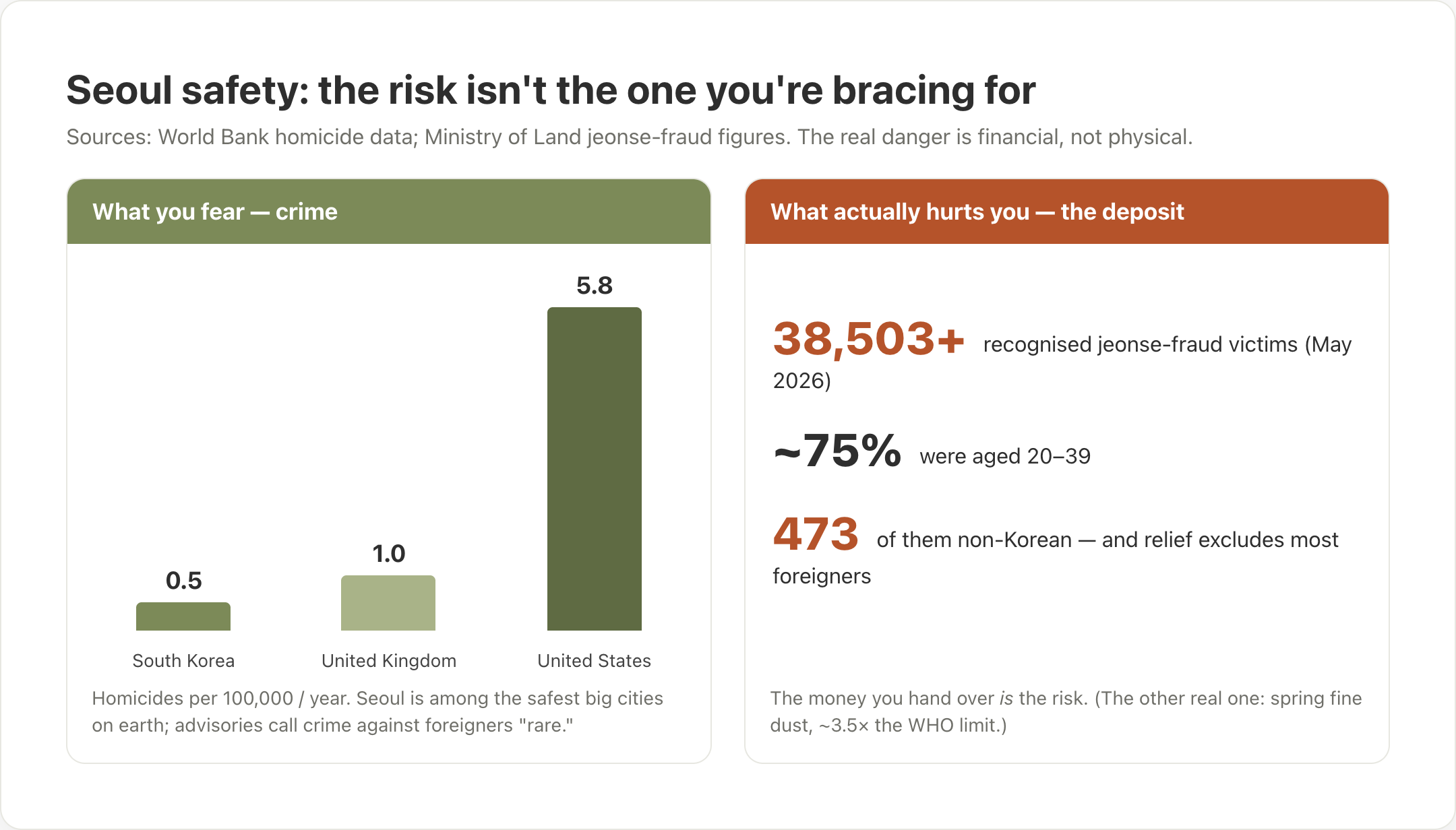
If you’ve read the cost layer, you already have the spine. If you haven’t, the one thing to carry in is that Seoul’s defining feature is the deposit, and that fact reaches further than money: it’s also, as you’ll see in a moment, the single most dangerous thing about living here.
A reminder on method, because Part 2 is where it matters most: I was in Seoul in 2025, but a visit is not a tax opinion; the healthcare, visa, and tax claims below are the kind that change on January cycles and ruin people who trust a stale blog post. I’ve sourced each to an official or primary source and dated it, and I’ve flagged, clearly, the handful of load-bearing figures I could not nail to an official page, so you confirm them before you act. The honesty about what I couldn’t verify is part of what you’re paying for.
1. Safety: the safest city you’ll worry about for the wrong reasons
Start with the reassurance, because it’s earned and it’s large. Seoul is one of the safest big cities on earth. South Korea’s homicide rate is around 0.5 per 100,000 people a year (Korea’s own tally of ~1.6 is higher only because it counts attempted murders), roughly one-tenth the United States’ rate and about half the United Kingdom’s. The UK Foreign Office’s own travel advice says plainly that “crime against foreigners is rare.” The lived expression of those numbers is a city where people hold a café table by leaving a laptop on it, where a woman walking home alone after midnight is unremarkable, and where the subway runs safely to nearly 1 a.m.
One number looks like it contradicts this, so let me defuse it: Korea ranks a middling #41 on the 2025 Global Peace Index. That rank is dragged down almost entirely by militarization, the small matter of a heavily armed border with North Korea — not by everyday criminal violence, where Korea scores near the top of the world. Don’t read the GPI rank as “Seoul is dangerous.” On the things that touch a resident’s day, it isn’t.