

Is it your dream to move to Southeast Asia? Enjoy a unique lifestyle and try living in Singapore. Learn what it’s really like living in this tiny city-state.
A comfortable month for one person comes to about S$4,873, or US$3,800. Housing is the main cost to plan for, as property and rent in Singapore are among the highest in Asia. But some things are amazingly cheap, like public transport, taxis and local food. The train system is called the MRT. It’s brilliant, cheap, frequent, and reliable. However, expat life in Singapore isn’t cheap.
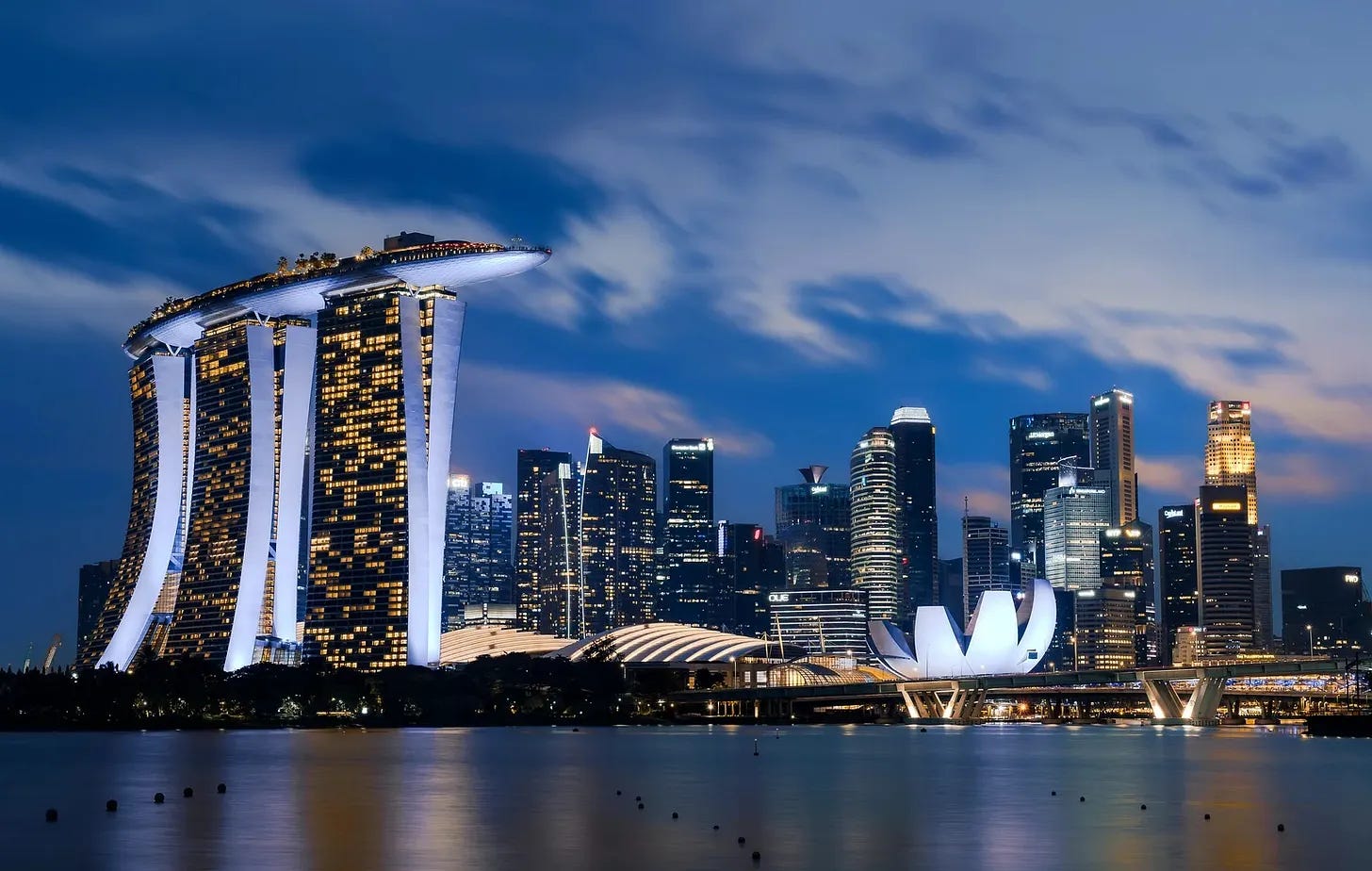
Known for safety, efficiency, and excellent infrastructure, it’s particularly attractive to professionals in finance, technology, and international business, despite its higher cost of living.
Singapore is a tiny island city-state in Southeast Asia. Singapore is an island off the southern tip of the Malay Peninsula, it is clean, modern, and safe. Given the small size of the country, the culturally diverse population is quite shocking.
Saturday’s full teardown will cover things like the best areas to live, understanding the local culture, your long-term visa options, and the day-to-day quirks that living in Singapore brings with it. So you can decide if being a Singapore expat and living in this unique city-state is right for you
Singapore is a multicultural nation with four official languages: English, Malay, Mandarin, and Tamil. Malay is the national language but English is the most widely spoken. So, if you speak English, integrating into Singaporean culture will be easier for you since you already have a common language with the locals. Given the geographic location of Singapore, most are pleasantly surprised when they can get off the plane and instantly converse with locals.
Climate: Singapore is about 137km north of the equator, and the annual mean relative humidity is roughly 82%. Its climate is tropical, with abundant rainfall, high and uniform temperatures, and high humidity all year round. The temperature stays around 26-32C on average year round or 79-90F. Day length stays relatively constant throughout the year, a marked change for travellers coming from seasonal climates.
International schools often have a big impact on people’s decision if they’re moving here with their family. Foreigners may apply to local schools, but admission depends on the applicable registration exercise or test, the student’s age and available places; many expat families choose an international school instead. If that’s a priority for you then I recommend seeking out a dedicated school and neighbourhood guide so you can match your children’s school with where to live. Although the country is small, you still don’t want to have to commute from one end to another if you don’t need to. The transition to life in Singapore will also be easier on your kids if they’re near their friends and classmates for after-school time. But if you don’t need to worry about international schools, you’ll have a lot more freedom in where you decide to live in Singapore.
You can also get to any part of Singapore easily via public transport.
The trade-offs are straightforward: housing is expensive, and costs like private health care and school fees can add up quickly. But is it worth the premium?
Living in Singapore offers cultural diversity, a large expat community, and a prime location to explore the rest of Southeast Asia.
Asia’s leading cities are known for their world-class infrastructure, especially in public transport and healthcare, key considerations for anyone living in Singapore as an expat, or navigating expat life in Hong Kong, South Korea, and Japan. Singapore’s MRT and Hong Kong’s MTR are both clean and punctual, with English signage and automated ticketing.
Meanwhile, Singapore and Hong Kong offer more open, multicultural environments, where expat communities thrive and diversity is embraced. If you value stability and language ease, an expat living in Singapore may be the smoothest choice.
Singapore represents the premium option for expatriates in Asia, offering strong infrastructure, cleanliness, and efficiency. While expensive by Asian standards, it provides a seamless transition with English as an official language and Western amenities readily available. Singapore also stands as an attractive destination in Asia for expatriates seeking career opportunities and a high quality of life. There are abundant job opportunities in sectors such as banking, technology, and logistics.
This little country has a big reputation for being expensive but I don’t think that’s entirely fair. If you go to Marina Bay Sands frequently and enjoy nice dinner and cocktails, your life in Singapore will be ridiculously costly. On the other hand, if you enjoy local food and stick to local bars for after-work drinks, it still might not be as cheap as other Southeast Asian countries but it won’t be nearly as costly as you might have expected.
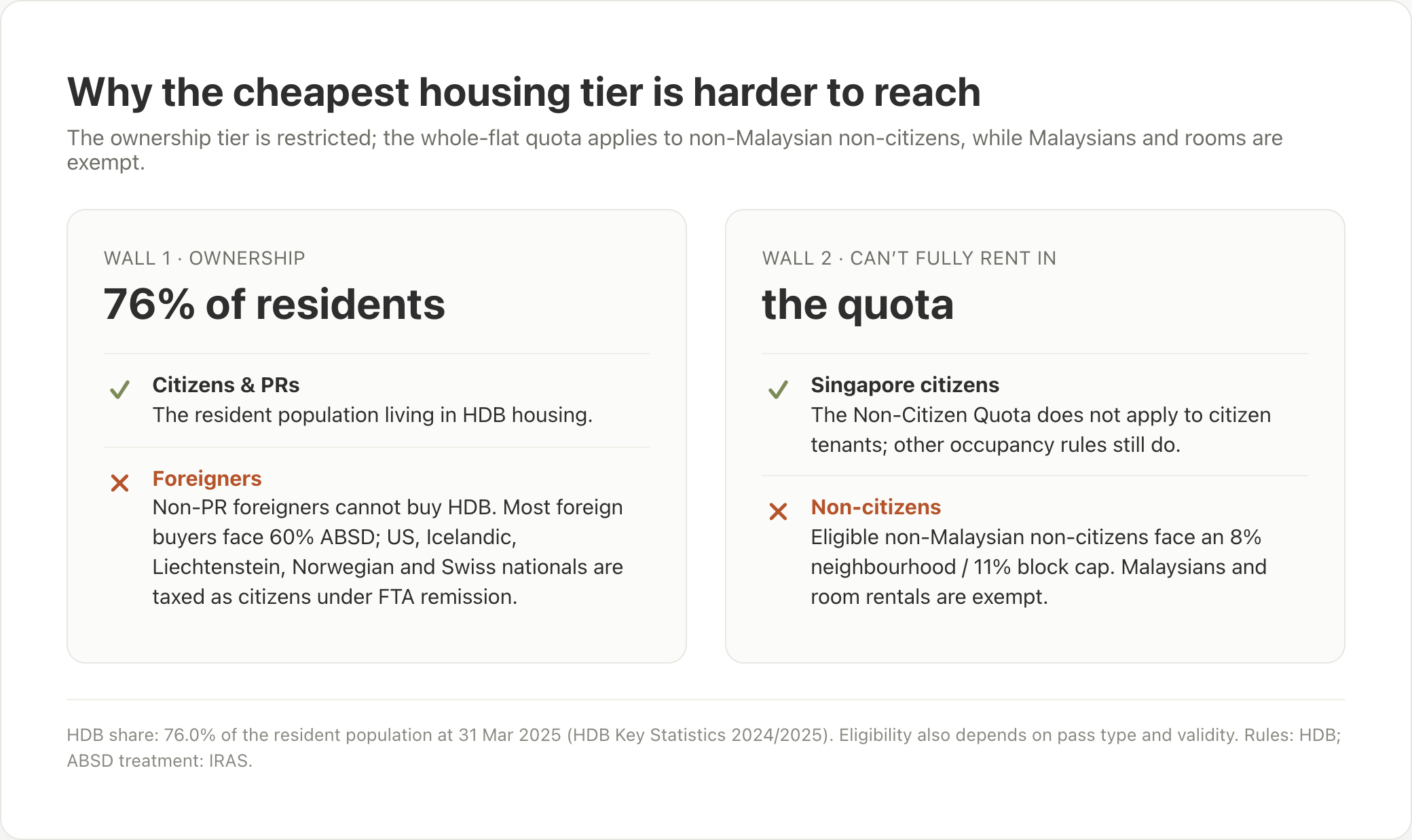
The housing wall
The area you live in will also have a big impact on your day-to-day cost of living as prices can vary a lot across the island. Rent will be your biggest expense and flats are quite small overall. When budgeting for housing expenses, research average rent or mortgage costs in your desired area and factor in additional costs like utilities, insurance, and maintenance.
Foreigners with an eligible pass may rent an HDB flat or room, subject to HDB approval and occupancy rules; whole-flat applicants may hold Employment Passes, S Passes, Work Permits, Student Passes, Dependant Passes or Long-Term Social Visit Passes valid for at least six months when applying. Non-Malaysian Work Permit holders in construction, manufacturing, marine and process cannot rent a whole flat; for bedroom rentals, the narrower exclusion covers construction, marine and process, while occupancy limits still depend on flat type.
This Saturday: the full post on Singapore.
If you are on the ground in Singapore please let me know if anything is off. Readers who actually live in these cities are always my most reliable fact-checkers.
One change worth flagging. From next week it’s one post a week, with the free preview and the paid research in a single article instead of split across separate sends. Each city arrives whole, in one place, and your inbox gets one email instead of three. My own projects are part of the reason, but the format is better this way.
Thanks for reading!
-Wei